
"Japanese intellectuals"
80 article(s) found

Cafe culture Cafe rise of intellectuals
Lu Xun once wrote in his Revolutionary Cafe that it was indeed an ideal paradise to imagine the towering foreign-style building facing a broad street, with a glittering glass signboard at the door, and upstairs were famous people in our literary and artistic circles, either talking or pondering, and in front of them was a large cup of steaming proletarian coffee. But Lu Xun himself doesn't drink coffee, he drinks green tea alone, so this coffee

Coffee Cafe with the rise of Common sense intellectuals
Mr. Lu Xun once wrote in the Revolutionary Cafe: the towering foreign building, facing Kuo Street, the doorway is a glittering glass signboard, and upstairs are our celebrities in today's literary and art circles, either talking or meditating. in front is a large cup of steaming proletarian coffee, but it is really an ideal paradise. But Lu Xun himself does not drink coffee, he drinks green tea alone, so this kind of coffee

Intellectuals and Cafe Culture
It was certainly not the earliest coffee shop in Shanghai, nor was it the best coffee shop in Shanghai at that time, but because the Chinese left-wing Writers' Union became what later generations called "the most famous coffee shop of that era."
Intellectual cafe culture
Although he did not enjoy the store's signature drink, the public coffee cafe is still famous for Lu Xun's many trips. Gongfen was located near the tram terminal on North Sichuan Road in Shanghai at that time, opposite the Neishan Bookstore. It must not have been the earliest coffee shop in Shanghai, nor was it the best coffee shop in Shanghai at that time. But because the Chinese left-wing Writers' Union became the era that later generations said.

Intellectuals and Cafe Culture
Although he did not enjoy the store's signature drink, the public coffee cafe is still famous for Lu Xun's many trips. Gongfen was located near the tram terminal on North Sichuan Road in Shanghai at that time, opposite the Neishan Bookstore. It must not have been the earliest coffee shop in Shanghai, nor was it the best coffee shop in Shanghai at that time. But because the Chinese left-wing Writers' Union became the era that later generations said.

The cultural relationship between coffee intellectuals and cafes
Zheng Yongqing's teahouse closed down quietly after four years of opening because of its high style, poor management and successive years of deficit. However, the coffee culture craze set off by teahouses has led to the continuous emergence of successors. In 1890, the jewel coffee shop in Asakusa in Tokyo officially opened. In 1909, the Old S ã o Paulo Cafe (Caf Paulista), the first generation of Brazilian immigrants from Japan, got a free coffee shop from Brazil.

Intellectuals and Cafe Culture General knowledge of Fine Coffee Culture
Although he did not enjoy the store's signature drink, the public coffee cafe is still famous for Lu Xun's many trips. Gongfen was located near the tram terminal on North Sichuan Road in Shanghai at that time, opposite the Neishan Bookstore. It must not have been the earliest coffee shop in Shanghai, nor was it the best coffee shop in Shanghai at that time. But because the Chinese left-wing Writers' Union became the era that later generations said.
The relationship between Zheng Yongqing and the Cafe
In Japan, cafes also became popular among intellectuals and then among the general public by virtue of the cultural movement. On April 13, 1888, the first coffee shop in Japan opened twice in Tokyo's Ueno Nishimen-cho (another said that the earliest coffee shop in Japan was the washing Pavilion opened in Tokyo's Nippon Bridge in 1886). The owner, Zheng Yongqing, also has a special relationship with China.
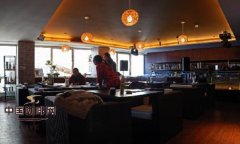
Celebrity and Coffee the relationship between Zheng Yongqing and the Cafe
In Japan, cafes also became popular among intellectuals and then among the general public by virtue of the cultural movement. On April 13, 1888, the first coffee shop in Japan opened twice in Tokyo's Ueno Nishimen-cho (another said that the earliest coffee shop in Japan was the washing Pavilion opened in Tokyo's Nippon Bridge in 1886). The owner, Zheng Yongqing, also has a special relationship with China.
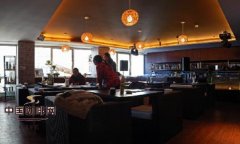
The Origin of the Coffee Culture knowledge Zheng Yongqing and the Cafe
In Japan, cafes also became popular among intellectuals and then among the general public by virtue of the cultural movement. On April 13, 1888, the first coffee shop in Japan opened twice in Tokyo's Ueno Nishimen-cho (another said that the earliest coffee shop in Japan was the washing Pavilion opened in Tokyo's Nippon Bridge in 1886). The owner, Zheng Yongqing, also has a special relationship with China.

The Origin of the Coffee Culture knowledge Zheng Yongqing and the Cafe
In Japan, cafes also became popular among intellectuals and then among the general public by virtue of the cultural movement. On April 13, 1888, the first coffee shop in Japan opened twice in Tokyo's Ueno Nishimen-cho (another said that the earliest coffee shop in Japan was the washing Pavilion opened in Tokyo's Nippon Bridge in 1886). The owner, Zheng Yongqing, also has a special relationship with China.

Zheng Yongqing's relationship with the Cafe the Culture of the Cafe
In Japan, cafes also became popular among intellectuals and then among the general public by virtue of the cultural movement. On April 13, 1888, the first coffee shop in Japan opened twice in Tokyo's Ueno Nishimen-cho (another said that the earliest coffee shop in Japan was the washing Pavilion opened in Tokyo's Nippon Bridge in 1886). The owner, Zheng Yongqing, also has a special relationship with China.
Can coffee
In terms of "coffee or tea", Mr. Lu Xun does not have any Western habits. Everyone else wants coffee, but he wants tea. Although he did not enjoy the shop's signature drink, the public coffee cafe is still famous for Lu Xun's many visits.

Taiwan Kaohsiung Xiaoti Coffee-- second Sister's 38-year-old Japanese Coffee Shop
No menu,menu is the mouth of the shopkeeper's second sister: do you drink acid? Or not too sour? I pretend to ask intellectually where the beans are from? Unexpectedly, the landlady snorted: do you drink acid? Or not too sour? I don't think she understood my question and asked it again. This time she glanced impatiently at her mouth and said, "have a drink." Do you drink sour? Or not too sour?
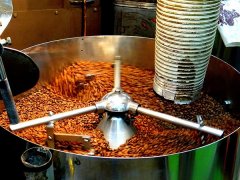
Coffee Culture in Japan-- the History of hand-made Coffee and Cafe
Exchange of professional baristas Please follow the Coffee Workshop (Wechat official account cafe_style) when in Tokyo, I like to stop in different corners of the city and sit in the coffee shop around the street for a while, such as gallery to Genzu in Nanqingshan, Dafang cafe that comes out of the subway station, and Caf de Lambre when shopping in Ginza. The pace of life is extreme.
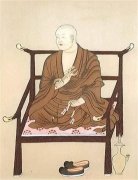
What is the traditional Japanese tea ceremony? the three ancestors of the Japanese tea ceremony and the interpretation of cultural and historical stories
Tea is an important part of Japan's long history and culture. This popular drink has been consumed all over Japan for centuries, and it is still popular among Japanese. It is believed that tea entered Japan from China, and China is the real birthplace of all kinds of tea. Tea culture originated in China and spread to Asian countries and other parts of the world. The art of Japanese tea

How does American intellectual coffee sell coffee? The intellectual coffee icon has a story.
Professional coffee knowledge exchange more coffee bean information Please follow the coffee workshop (Wechat official account cafe_style) I like to drink coffee, at least one cup a day, sometimes two cups, but no more, my heart can't stand it. I started drinking at Starbucks when I was a student, and then the Seesaw in Shanghai opened to drink there, and then small cafes sprang up everywhere, and I noticed that on the menu

Japanese coffee culture, the symbol of Japanese coffee culture
The coffee shop in Kyoto is quite charming. After coming out of the Yinge Temple, you can climb a few street corners and climb into the mountains for 20 minutes. There is a Maomao hidden in the mountains, which is a secret shop spread by word of mouth of coffee maniacs. In Shu Guozhi's book "A layman's Kyoto", there is an article "sitting in a Cafe in Kyoto", which mentions cafes in the ancient capital, some of which have been in operation for decades, while others hide in the corners of historic buildings.
Peony Street, a cup of coffee with literature and art.
Some people compare Mudan Street to Nanluo Drum Lane in Changchun. This is a place where many young people often hang out, with delicious restaurants, toy shops, cafes, bookstores, all kinds of fashion elements, and occasionally encounter some fresh and personalized gadgets you like, and some strange people and pets have a small yard. Up two steps there is a small terrace made of planks, a tree and so on.

How about American Shudun City Coffee? a brief understanding of the development of Xia Shudun City Coffee
Professional coffee knowledge exchange more coffee bean information Please pay attention to Coffee Workshop (Wechat official account cafe_style) Tree Pier City is a nickname for Portland, Oregon, in the 19th century, in order to adapt to the rapid population growth, Portland cut down forests to take land, the city can be seen everywhere uncleared stumps, hence the name. In 1999, the 20-year-old Duane founded the Shudun City Coffee Bakery in Portland.